
Permanent Asti Bridge
What’s Happening?
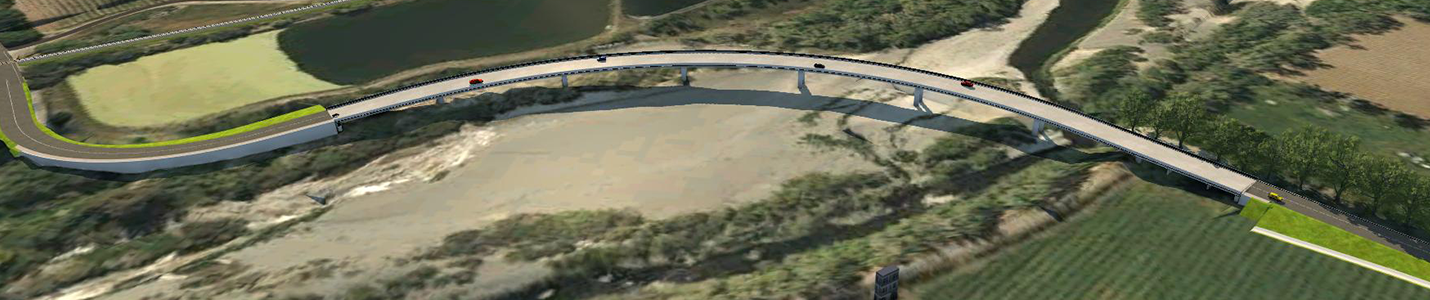
Sonoma County is advancing plans to construct a permanent bridge at the Asti–Cloverdale crossing of the Russian River to provide reliable, year-round access. The project is estimated to cost approximately $30 million.
The Asti crossing has served the community for more than 100 years and is considered an important connection for residents, emergency responders, and the broader Cloverdale area. Over the past decade, discussions regarding a permanent bridge have intensified as wildfire experience, evacuation planning, environmental considerations, and infrastructure best practices have highlighted the need for improved emergency access.
The County has completed borings in the river channel. The geotechnical information gathered from these studies is informing the next phase of bridge design.
To date, nearly $3 million in County funds have supported environmental review, preliminary design, and engineering. Earlier environmental studies were completed, and a Mitigated Negative Declaration was adopted. District 4 Supervisor James Gore has supported advancement of the project, working with Sonoma Public Infrastructure to secure environmental review, preliminary engineering, and funding to move the effort forward. In addition, the Alexander Valley Citizens League (AVCL) raised approximately $20,000 to support early planning studies associated with the permanent bridge effort.
In the meantime, a temporary seasonal bridge continues to provide access. It is installed annually after June 15, once environmental permits allow, and construction takes approximately two weeks. For 2025, bridge removal began on October 20 due to weather forecasts.
How We Got Here
For many years, the community has relied on a seasonal temporary bridge. However, increasing concerns about wildfire risk, evacuation routes, and emergency response access have made a permanent structure a priority.
Following a series of major wildfires and increased awareness of evacuation challenges—particularly east of the Russian River during Diablo wind events— community members raised concerns about evacuation and emergency access and engaged with the County regarding long-term infrastructure improvements. Community advocacy organizations, including the Alexander Valley Citizens League, have supported these efforts and contributed funding toward early bridge planning studies.
Recent related improvements include:
- Completion of River Road improvements by Public Infrastructure.
- Securing $7.4 million in State and Federal grant funding for vegetation management and wildfire mitigation to support emergency access.
- Advancing environmental review and preliminary bridge planning.
Supervisor Gore has remained engaged throughout the process, working with Public Infrastructure, residents, and stakeholders to advance environmental review, engineering, and funding exploration.
Why It Matters
A permanent bridge would:
- Provide reliable year-round access, especially during wildfires, floods, and other emergencies.
- Improve wildfire evacuation safety, offering a critical secondary evacuation route for approximately 300 homes east of the Russian River.
- Enhance emergency response times for fire, medical, and law enforcement services.
- Reduce environmental disturbance associated with annual installation and removal of the temporary bridge.
- Increase long-term economic efficiency, reducing ongoing temporary bridge costs, daily travel distances, emissions, and travel time.
- Strengthen overall community safety and resilience.
A FEMA cost-benefit analysis determined that the long-term benefits of a permanent bridge exceed the projected costs, reflecting improved safety outcomes and avoided losses.
What’s Next
With environmental review complete and preliminary design underway, the project is entering its financing and final design phase.
2026: The County is considering formation of a special financing (assessment) district for properties that would directly benefit from the bridge. If pursued, the process would include:
- Board of Supervisors action to initiate the district formation process.
- A public community meeting to explain the structure and implications.
- A formal public hearing and majority approval in accordance with statutory requirements.
Formation of a Financing District is expected to go before the Board of Supervisors in April 2026.
Construction timing will be determined following completion of final design and financing decisions.
Timeline (Recent Milestones)
- Late 2025 onward: Design completion and financing decisions.
- Jan–May 2025: Community meetings and funding strategy discussions.
- Dec 2023–Sept 2024: Environmental review and adoption of Mitigated Negative Declaration.
Get Involved
Community participation remains an important part of this process.
- Attend a Board of Supervisors Meeting. A meeting to consider next steps in the financing process is tentatively anticipated in 2026 (date to be confirmed). Meetings begin at 9:00 a.m. at 575 Administration Drive, Room 102A, Santa Rosa.
- Submit written comments to the Board of Supervisors at:
575 Administration Drive, Room 100A, Santa Rosa, CA 95403
Email comments to: bos@sonomacounty.gov - Participate in community meetings. Notes and recordings are available.
- Complete the Community Survey to provide input regarding a potential Bridge Assessment District.
For additional information, contact Adriane Garayalde at adriane.garayalde@sonomacounty.gov.
 Translate